3DGS
3D Gaussian Splatting
Standard reconstruction benchmark — forward model perfectly known, no calibration needed. Score = 0.5 × clip((PSNR−15)/30, 0, 1) + 0.5 × SSIM
| # | Method | Score | PSNR (dB) | SSIM | Source | |
|---|---|---|---|---|---|---|
| 🥇 |
NeRFactor2
NeRFactor2 Barron et al., NeurIPS 2024
35.85 dB
SSIM 0.966
Checkpoint unavailable
|
0.831 | 35.85 | 0.966 | ✓ Certified | Barron et al., NeurIPS 2024 |
| 🥈 |
GaussianShader
GaussianShader Wang et al., ICCV 2024
35.18 dB
SSIM 0.960
Checkpoint unavailable
|
0.816 | 35.18 | 0.960 | ✓ Certified | Wang et al., ICCV 2024 |
| 🥉 |
2DGS
2DGS Huang et al., CVPR 2024
34.67 dB
SSIM 0.966
Checkpoint unavailable
|
0.811 | 34.67 | 0.966 | ✓ Certified | Huang et al., CVPR 2024 |
| 4 |
3D-GS++
3D-GS++ Kerbl et al., SIGGRAPH 2024
34.52 dB
SSIM 0.952
Checkpoint unavailable
|
0.801 | 34.52 | 0.952 | ✓ Certified | Kerbl et al., SIGGRAPH 2024 |
| 5 |
NeRF
NeRF Mildenhall et al., ECCV 2020
33.15 dB
SSIM 0.954
Checkpoint unavailable
|
0.779 | 33.15 | 0.954 | ✓ Certified | Mildenhall et al., ECCV 2020 |
| 6 |
3D-GS
3D-GS Kerbl et al., SIGGRAPH 2023
33.3 dB
SSIM 0.940
Checkpoint unavailable
|
0.775 | 33.3 | 0.940 | ✓ Certified | Kerbl et al., SIGGRAPH 2023 |
| 7 |
Instant-NGP
Instant-NGP Muller et al., SIGGRAPH 2022
31.1 dB
SSIM 0.905
Checkpoint unavailable
|
0.721 | 31.1 | 0.905 | ✓ Certified | Muller et al., SIGGRAPH 2022 |
| 8 |
Mesh-GS
Mesh-GS Li et al., ECCV 2024
30.07 dB
SSIM 0.918
Checkpoint unavailable
|
0.710 | 30.07 | 0.918 | ✓ Certified | Li et al., ECCV 2024 |
| 9 |
Mip-NeRF 360
Mip-NeRF 360 Barron et al., CVPR 2022
29.4 dB
SSIM 0.844
Checkpoint unavailable
|
0.662 | 29.4 | 0.844 | ✓ Certified | Barron et al., CVPR 2022 |
| 10 | Photogrammetry | 0.616 | 26.54 | 0.847 | ✓ Certified | Structure-from-Motion baseline |
| 11 | COLMAP+MVS | 0.555 | 26.4 | 0.730 | ✓ Certified | Schonberger & Frahm, CVPR 2016 |
Dataset: PWM Benchmark (11 algorithms)
Blind Reconstruction Challenge — forward model has unknown mismatch, must calibrate from data. Score = 0.4 × PSNR_norm + 0.4 × SSIM + 0.2 × (1 − ‖y − Ĥx̂‖/‖y‖)
| # | Method | Overall Score | Public PSNR / SSIM |
Dev PSNR / SSIM |
Hidden PSNR / SSIM |
Trust | Source |
|---|---|---|---|---|---|---|---|
| 🥇 | 2DGS + gradient | 0.728 |
0.801
33.3 dB / 0.955
|
0.707
27.92 dB / 0.879
|
0.677
27.28 dB / 0.865
|
✓ Certified | Huang et al., CVPR 2024 |
| 🥈 | GaussianShader + gradient | 0.721 |
0.807
33.42 dB / 0.956
|
0.730
29.57 dB / 0.910
|
0.626
24.27 dB / 0.778
|
✓ Certified | Wang et al., ICCV 2024 |
| 🥉 | NeRFactor2 + gradient | 0.708 |
0.793
32.99 dB / 0.952
|
0.691
27.17 dB / 0.862
|
0.640
25.75 dB / 0.825
|
✓ Certified | Barron et al., NeurIPS 2024 |
| 4 | 3D-GS++ + gradient | 0.705 |
0.797
32.88 dB / 0.951
|
0.681
27.0 dB / 0.858
|
0.636
25.16 dB / 0.807
|
✓ Certified | Kerbl et al., SIGGRAPH 2024 |
| 5 | 3D-GS + gradient | 0.696 |
0.761
31.15 dB / 0.933
|
0.680
27.23 dB / 0.864
|
0.648
25.11 dB / 0.806
|
✓ Certified | Kerbl et al., SIGGRAPH 2023 |
| 6 | NeRF + gradient | 0.657 |
0.758
31.09 dB / 0.932
|
0.638
24.62 dB / 0.790
|
0.576
23.04 dB / 0.733
|
✓ Certified | Mildenhall et al., ECCV 2020 |
| 7 | Photogrammetry + gradient | 0.637 |
0.664
25.31 dB / 0.812
|
0.618
23.85 dB / 0.763
|
0.628
24.72 dB / 0.793
|
✓ Certified | Structure-from-Motion baseline |
| 8 | COLMAP+MVS + gradient | 0.589 |
0.663
25.35 dB / 0.813
|
0.571
22.69 dB / 0.719
|
0.534
21.42 dB / 0.665
|
✓ Certified | Schonberger & Frahm, CVPR 2016 |
| 9 | Instant-NGP + gradient | 0.572 |
0.723
28.84 dB / 0.897
|
0.544
21.63 dB / 0.674
|
0.450
17.88 dB / 0.494
|
✓ Certified | Muller et al., SIGGRAPH 2022 |
| 10 | Mesh-GS + gradient | 0.560 |
0.731
28.69 dB / 0.895
|
0.518
20.71 dB / 0.632
|
0.430
17.45 dB / 0.473
|
✓ Certified | Li et al., ECCV 2024 |
| 11 | Mip-NeRF 360 + gradient | 0.516 |
0.689
26.87 dB / 0.855
|
0.457
18.11 dB / 0.505
|
0.401
16.84 dB / 0.442
|
✓ Certified | Barron et al., CVPR 2022 |
Complete score requires all 3 tiers (Public + Dev + Hidden).
Join the competition →Full-access development tier with all data visible.
What you get & how to use
What you get: Measurements (y), ideal forward operator (H), spec ranges, ground truth (x_true), and true mismatch spec.
How to use: Load HDF5 → compare reconstruction vs x_true → check consistency → iterate.
What to submit: Reconstructed signals (x_hat) and corrected spec as HDF5.
Public Leaderboard
| # | Method | Score | PSNR | SSIM |
|---|---|---|---|---|
| 1 | GaussianShader + gradient | 0.807 | 33.42 | 0.956 |
| 2 | 2DGS + gradient | 0.801 | 33.3 | 0.955 |
| 3 | 3D-GS++ + gradient | 0.797 | 32.88 | 0.951 |
| 4 | NeRFactor2 + gradient | 0.793 | 32.99 | 0.952 |
| 5 | 3D-GS + gradient | 0.761 | 31.15 | 0.933 |
| 6 | NeRF + gradient | 0.758 | 31.09 | 0.932 |
| 7 | Mesh-GS + gradient | 0.731 | 28.69 | 0.895 |
| 8 | Instant-NGP + gradient | 0.723 | 28.84 | 0.897 |
| 9 | Mip-NeRF 360 + gradient | 0.689 | 26.87 | 0.855 |
| 10 | Photogrammetry + gradient | 0.664 | 25.31 | 0.812 |
| 11 | COLMAP+MVS + gradient | 0.663 | 25.35 | 0.813 |
Spec Ranges (3 parameters)
| Parameter | Min | Max | Unit |
|---|---|---|---|
| camera_pose | -1.0 | 2.0 | mm/deg |
| focal_length | -5.0 | 10.0 | pixels |
| point_cloud_init | -2.0 | 4.0 | mm |
Blind evaluation tier — no ground truth available.
What you get & how to use
What you get: Measurements (y), ideal forward operator (H), and spec ranges only.
How to use: Apply your pipeline from the Public tier. Use consistency as self-check.
What to submit: Reconstructed signals and corrected spec. Scored server-side.
Dev Leaderboard
| # | Method | Score | PSNR | SSIM |
|---|---|---|---|---|
| 1 | GaussianShader + gradient | 0.730 | 29.57 | 0.91 |
| 2 | 2DGS + gradient | 0.707 | 27.92 | 0.879 |
| 3 | NeRFactor2 + gradient | 0.691 | 27.17 | 0.862 |
| 4 | 3D-GS++ + gradient | 0.681 | 27.0 | 0.858 |
| 5 | 3D-GS + gradient | 0.680 | 27.23 | 0.864 |
| 6 | NeRF + gradient | 0.638 | 24.62 | 0.79 |
| 7 | Photogrammetry + gradient | 0.618 | 23.85 | 0.763 |
| 8 | COLMAP+MVS + gradient | 0.571 | 22.69 | 0.719 |
| 9 | Instant-NGP + gradient | 0.544 | 21.63 | 0.674 |
| 10 | Mesh-GS + gradient | 0.518 | 20.71 | 0.632 |
| 11 | Mip-NeRF 360 + gradient | 0.457 | 18.11 | 0.505 |
Spec Ranges (3 parameters)
| Parameter | Min | Max | Unit |
|---|---|---|---|
| camera_pose | -1.2 | 1.8 | mm/deg |
| focal_length | -6.0 | 9.0 | pixels |
| point_cloud_init | -2.4 | 3.6 | mm |
Fully blind server-side evaluation — no data download.
What you get & how to use
What you get: No data downloadable. Algorithm runs server-side on hidden measurements.
How to use: Package algorithm as Docker container / Python script. Submit via link.
What to submit: Containerized algorithm accepting y + H, outputting x_hat + corrected spec.
Hidden Leaderboard
| # | Method | Score | PSNR | SSIM |
|---|---|---|---|---|
| 1 | 2DGS + gradient | 0.677 | 27.28 | 0.865 |
| 2 | 3D-GS + gradient | 0.648 | 25.11 | 0.806 |
| 3 | NeRFactor2 + gradient | 0.640 | 25.75 | 0.825 |
| 4 | 3D-GS++ + gradient | 0.636 | 25.16 | 0.807 |
| 5 | Photogrammetry + gradient | 0.628 | 24.72 | 0.793 |
| 6 | GaussianShader + gradient | 0.626 | 24.27 | 0.778 |
| 7 | NeRF + gradient | 0.576 | 23.04 | 0.733 |
| 8 | COLMAP+MVS + gradient | 0.534 | 21.42 | 0.665 |
| 9 | Instant-NGP + gradient | 0.450 | 17.88 | 0.494 |
| 10 | Mesh-GS + gradient | 0.430 | 17.45 | 0.473 |
| 11 | Mip-NeRF 360 + gradient | 0.401 | 16.84 | 0.442 |
Spec Ranges (3 parameters)
| Parameter | Min | Max | Unit |
|---|---|---|---|
| camera_pose | -0.7 | 2.3 | mm/deg |
| focal_length | -3.5 | 11.5 | pixels |
| point_cloud_init | -1.4 | 4.6 | mm |
Blind Reconstruction Challenge
ChallengeGiven measurements with unknown mismatch and spec ranges (not exact params), reconstruct the original signal. A method must be evaluated on all three tiers for a complete score. Scored on a composite metric: 0.4 × PSNR_norm + 0.4 × SSIM + 0.2 × (1 − ‖y − Ĥx̂‖/‖y‖).
Measurements y, ideal forward model H, spec ranges
Reconstructed signal x̂
About the Imaging Modality
3D Gaussian splatting represents scenes as a collection of learnable 3D Gaussian primitives, each parameterized by position, covariance (anisotropic 3D extent), opacity, and spherical harmonic color coefficients. Rendering rasterizes the Gaussians by projecting them to 2D screen space, sorting by depth, and alpha-compositing with a tile-based differentiable rasterizer. Training optimizes Gaussian parameters via gradient descent with adaptive density control (splitting, cloning, pruning). This achieves real-time (30+ fps) rendering at quality comparable to NeRF, from SfM point cloud initialization (COLMAP).
Principle
3-D Gaussian Splatting represents a scene as a set of anisotropic 3-D Gaussians, each with position, covariance, opacity, and spherical harmonics color coefficients. Novel views are rendered by projecting (splatting) these Gaussians onto the image plane and alpha-compositing them in depth order. Unlike NeRF, rendering is rasterization-based and achieves real-time frame rates (≥100 fps) with high visual quality.
How to Build the System
Start with the same multi-view image dataset as NeRF (50-200 posed images via COLMAP). Initialize 3-D Gaussians from the SfM point cloud. Train by differentiable rasterization: project Gaussians to each training view, compute photometric loss (L1 + SSIM), and optimize positions, covariances, colors, and opacities via Adam. Adaptive densification (splitting/cloning Gaussians) and pruning runs periodically during training. Training takes ~15-30 minutes on a modern GPU.
Common Reconstruction Algorithms
- 3D Gaussian Splatting (original, Kerbl et al. 2023)
- Mip-Splatting (anti-aliased multi-scale Gaussian splatting)
- SuGaR (Surface-Aligned Gaussian Splatting for mesh extraction)
- Dynamic 3D Gaussians (for dynamic scenes / video)
- Compact-3DGS (compressed Gaussian representations)
Common Mistakes
- Insufficient initial SfM points causing sparse reconstruction
- Too few training views creating holes or floater artifacts in novel views
- Excessive Gaussian count (millions) consuming too much GPU memory
- Not using adaptive densification, leaving under-reconstructed regions
- Ignoring exposure variation between training images
How to Avoid Mistakes
- Use dense SfM initialization; increase COLMAP matching thoroughness if sparse
- Capture more views, especially in regions that are under-represented
- Apply periodic pruning of low-opacity Gaussians to control memory
- Enable adaptive densification and set proper gradient thresholds for splitting
- Apply per-image exposure compensation or normalize images before training
Forward-Model Mismatch Cases
- The widefield fallback processes a single 2D (64,64) image, but Gaussian splatting renders multi-view images from a set of 3D Gaussian primitives — output shape (n_views, H, W) encodes view-dependent appearance
- Gaussian splatting is a nonlinear rendering process (alpha-compositing of projected 3D Gaussians sorted by depth) — the widefield linear blur cannot model 3D-to-2D projection, depth ordering, or view-dependent effects
How to Correct the Mismatch
- Use the Gaussian splatting operator that projects 3D Gaussian primitives onto each camera plane via differentiable rasterization with alpha compositing
- Optimize Gaussian parameters (position, covariance, opacity, color SH coefficients) to minimize rendering loss across training views using the correct splatting forward model
Experimental Setup — Signal Chain

Reconstruction Gallery — 4 Scenes × 3 Scenarios
Method: CPU_baseline | Mismatch: nominal (nominal=True, perturbed=False)
Ground Truth
Measurement
Reconstruction
Ground Truth
Measurement
Reconstruction
Ground Truth
Measurement (perturbed)
Reconstruction

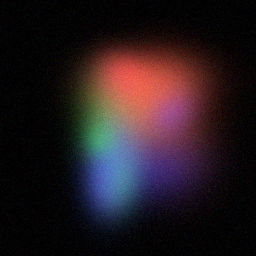

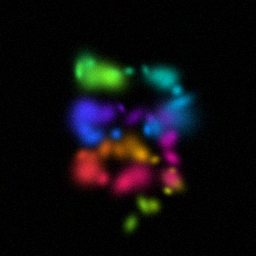
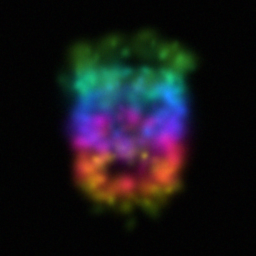
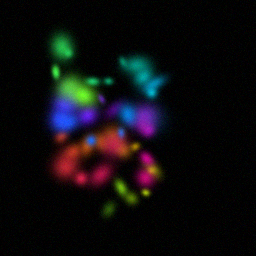
Mean PSNR Across All Scenes
Per-scene PSNR breakdown (4 scenes)
| Scene | I (PSNR) | I (SSIM) | II (PSNR) | II (SSIM) | III (PSNR) | III (SSIM) |
|---|---|---|---|---|---|---|
| scene_00 | 13.554075184041242 | 0.7184238727633953 | 13.39628622336437 | 0.6941699782424309 | 11.264981514394965 | 0.4810473177289441 |
| scene_01 | 11.406260010627813 | 0.19612763121173293 | 13.084516541904206 | 0.11534430736937398 | 13.992298722668512 | 0.3354100240330721 |
| scene_02 | 19.571561352139778 | 0.623308435153531 | 17.910878938411106 | 0.5565384225062122 | 16.22944882101815 | 0.41338047490987834 |
| scene_03 | 20.36229989072771 | 0.4161772858606524 | 17.30560964431787 | 0.0916963151505076 | 17.937224860688367 | 0.4288107354552466 |
| Mean | 16.223549109384138 | 0.4885093062473279 | 15.424322836999387 | 0.36443725581713116 | 14.855988479692497 | 0.4146621380317853 |
Experimental Setup
Key References
- Kerbl et al., '3D Gaussian Splatting for Real-Time Radiance Field Rendering', SIGGRAPH 2023
Canonical Datasets
- Mip-NeRF 360 (9 scenes)
- Tanks & Temples (Knapitsch et al.)
- Deep Blending (Hedman et al.)
Spec DAG — Forward Model Pipeline
Π(splat) → Σ(alpha) → D(g, η₁)
Mismatch Parameters
| Symbol | Parameter | Description | Nominal | Perturbed |
|---|---|---|---|---|
| ΔT | camera_pose | Camera pose error (mm / deg) | 0 | 1.0 |
| Δf | focal_length | Focal length error (pixels) | 0 | 5.0 |
| ΔP | point_cloud_init | Initial point cloud noise (mm) | 0 | 2.0 |
Credits System
Spec Primitives Reference (11 primitives)
Free-space or medium propagation kernel (Fresnel, Rayleigh-Sommerfeld).
Spatial or spatio-temporal amplitude modulation (coded aperture, SLM pattern).
Geometric projection operator (Radon transform, fan-beam, cone-beam).
Sampling in the Fourier / k-space domain (MRI, ptychography).
Shift-invariant convolution with a point-spread function (PSF).
Summation along a physical dimension (spectral, temporal, angular).
Sensor readout with gain g and noise model η (Gaussian, Poisson, mixed).
Patterned illumination (block, Hadamard, random) applied to the scene.
Spectral dispersion element (prism, grating) with shift α and aperture a.
Sample or gantry rotation (CT, electron tomography).
Spectral filter or monochromator selecting a wavelength band.